Craft, production, and the journey from screenplay to screen.
How to Break Down a Script, Scene by Scene
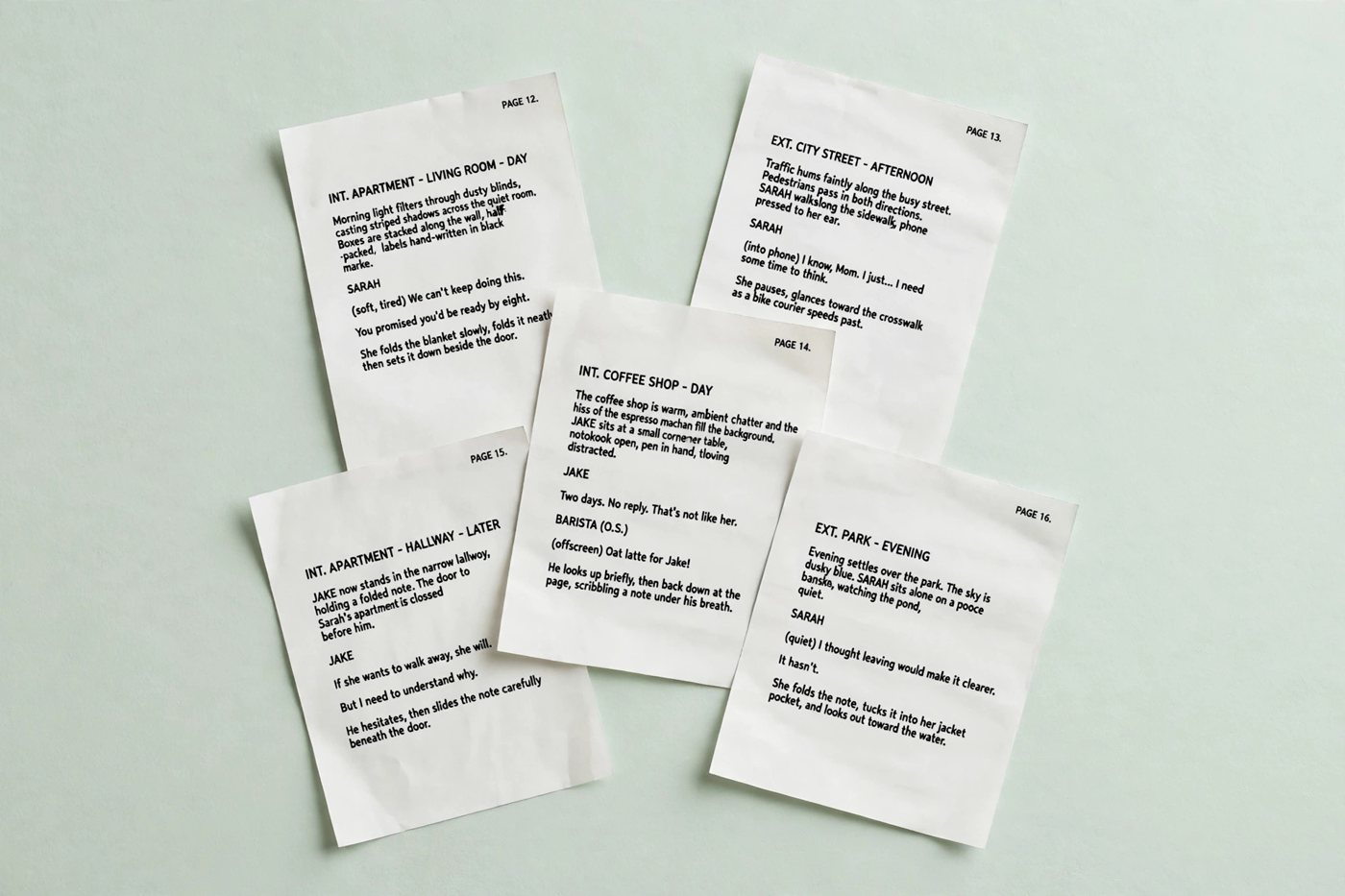
A script breakdown is the process of going through a locked screenplay scene by scene and listing everything each scene needs to be shot: the cast, the background performers, the props, the wardrobe, the vehicles, the effects, the locations, and the special equipment. It turns creative pages into logistical data a crew can plan against, and it is the document the shooting schedule and the budget are both built from.
The output is one breakdown sheet per scene. Each sheet carries the scene number, interior or exterior, day or night, page count, and every element sorted into categories. From the sheets you pull master lists: a props list, a wardrobe list, a cast list with scene counts, a vehicles list. When the breakdown is done well, a department head can open their list and know exactly what they owe the shoot, and on which day. When it is done badly, or skipped, the missing prop or the uncounted extra shows up on set, on the most expensive day, in front of everybody.
Who does the breakdown, and when
On most productions the first assistant director owns the breakdown, often with the line producer or production manager alongside. On a small independent film the producer may do it alone, or the director. Either way, one person should own the master copy so there is a single version of the truth, and the department heads should read from that copy rather than from their own notes.
Start once the script is close to locked and the scenes are numbered. If the writer is still restructuring acts, you will redo the work, so wait until the shape is settled. Small changes after that point are fine, because that is what revision pages are for. When the script changes after it has gone out, changed pages are usually issued on coloured paper in a fixed order: white, then blue, pink, yellow, green, and goldenrod. Even if you work digitally, mark which revision each scene came from so every department knows whether its copy is current. And keep the scene numbers fixed once the breakdown begins. A new scene gets a letter suffix, such as 12A or 12B, rather than renumbering everything after it.
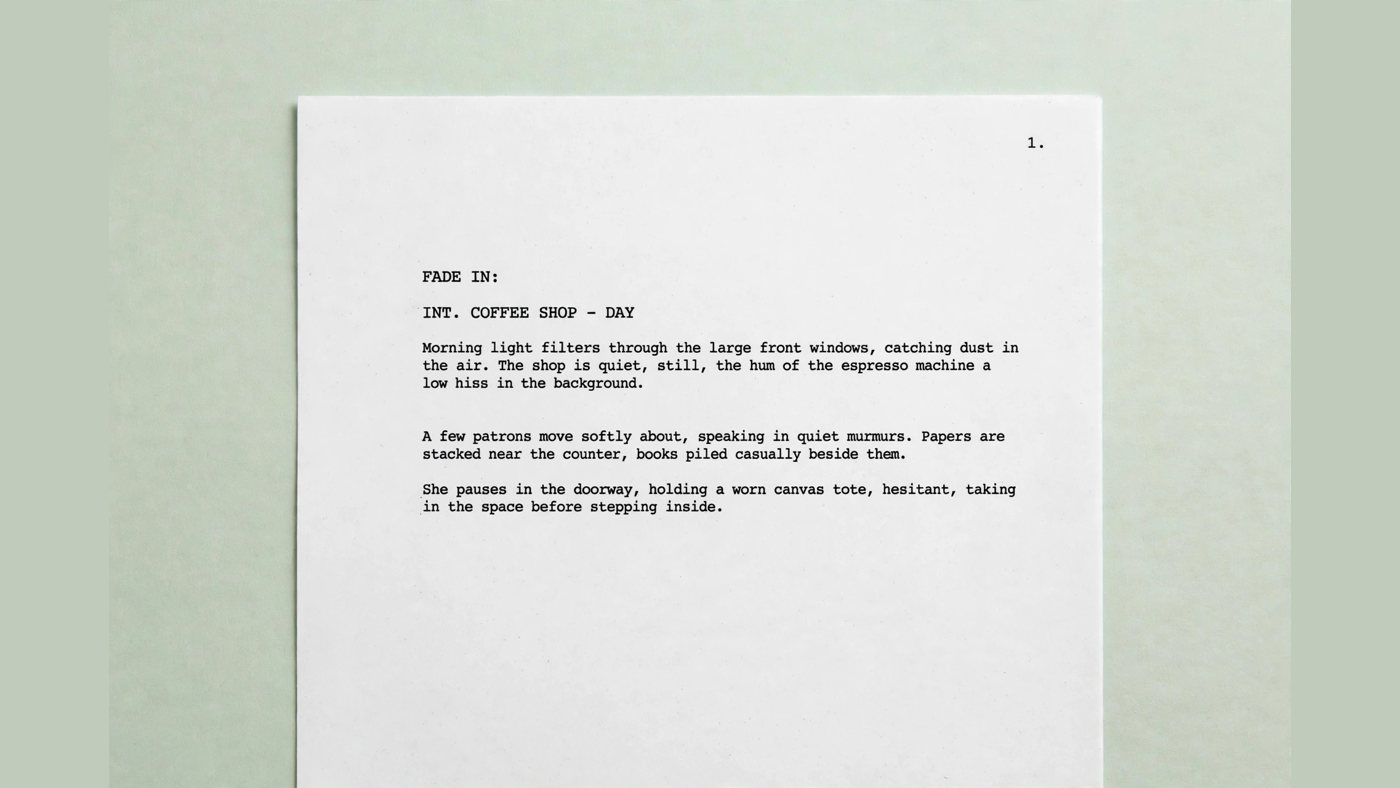
The script you break down has to be in standard format. Page counts only mean something if the script uses standard screenplay layout, so convert a notes app draft or a treatment into a proper screenplay first. Our guide to how to format a screenplay covers the page itself. A writer who breaks down their own script gets a second benefit from the same work: the breakdown is a feasibility read. It shows, in plain lists, what the script actually asks for, which is often more than the writer imagined while writing it.
Step one: read it once for story
Read the whole script without marking anything. You need to know what the film is about, which scenes carry the weight, and where the time jumps are before you start dismantling it. A read for story catches things a scene by scene pass will miss: the dog that appears in act three was established on page four, or a character's black eye from scene thirty is still visible in scene sixty one. It also tells you which scenes are the film, so you know where to spend your care and where a shortcut is safe.
While you read, keep a list of open questions for the director and collect them rather than guessing. You will find plenty. What does the crowd do in the market scene, how many people are in it, and does the lead actually drive the car or sit in it while it is towed? Every guessed answer in a breakdown becomes a wrong order, a wrong booking, or a conversation on set. Write the question down and get the answer before the schedule is built.
Step two: number the scenes and measure them in eighths
Give every scene heading a number, then measure each scene in eighths of a page. A scene that runs a page and a quarter is written as 1 2/8. A short insert is 1/8 even if it is one line. In standard format one page plays at roughly one minute of screen time, which is why page counts are the common currency for scheduling. Action heavy pages usually take longer to shoot than dialogue pages of the same length, so treat the count as a measure of length, not of difficulty.
Eighths matter because they are the unit the schedule and the budget are priced in. A scene of 3/8 is a different commitment from a scene of 2 5/8, and the difference decides whether two scenes fit in one day or need two. Count honestly. A writer who rounds every scene down is writing a schedule that will run over, and a first assistant director who rounds up is writing a budget the producer will cut.
Step three: fill one breakdown sheet per scene
Every scene gets a sheet with the same header: scene number, set, interior or exterior, day or night, page count, story day, and a one line synopsis. The synopsis should say what happens, not quote the script. "Meera finds the letter and hides it" is more useful on a stripboard than the scene heading, because the stripboard is read at a glance by people who have not memorised the script.
Story days matter more than people expect. If scenes fourteen and fifty two both happen on story day three, wardrobe and makeup need to match them even if you shoot them three weeks apart. A shirt with a coffee stain in the morning scene has to carry the same stain in the evening scene, and the only document that knows that is the breakdown sheet. Put the story day on every sheet, and check it before you shoot any scene that shares a day with another.
A breakdown sheet is not a creative document. It is a form, filled the same way every time, so that anyone on the crew can read any sheet without learning a new layout. Keep the categories in the same order on every sheet, keep the cast numbered the same way, and keep the notes short. The sheet is read at 6am by tired people. Clarity is the feature.
Step four: tag every element
Go line by line and tag anything a department has to provide. Work down the page and flag everything you see in a single pass per scene, then double check against the category list before moving on. Reading the scene once per category burns a full day on a feature. The usual categories are:
- Cast: speaking and named roles, numbered by importance, usually the lead as 1 and down from there. Keep those numbers for the life of the production. The stripboard, the day out of days report, and the call sheet all refer to cast by number.
- Background: extras and featured extras, with counts. A featured extra has no lines but performs a specific action. Atmosphere extras fill the space. "Crowd" is not a number. Agree a count for every scene.
- Stunts: any action that needs a coordinator or a double, from a fall to a fight to a car hit.
- Vehicles: picture vehicles that appear on screen, cars, bikes, boats. Production vehicles, the trucks that carry the gear, are not elements and do not go on the sheet.
- Props: anything an actor handles. A phone, a letter, a set of keys.
- Set dressing: objects in the set that nobody handles, furniture, framed photos, shelves of paint cans.
- Wardrobe: costume changes, and duplicates for damage, blood, or wet work. Label every wardrobe element with the character, the outfit number, and the story day.
- Makeup and hair: wounds, ageing, prosthetics, continuity looks.
- Special effects: practical effects on the day, rain, smoke, fire, squibs, breakaway glass.
- Visual effects: shots that need plates, markers, or a visual effects supervisor.
- Animals: any animal, with its handler. Large animals that need their own transport are often listed separately from small ones.
- Sound and music: playback, live music, a character singing, a specific sound the story needs.
- Special equipment: cranes, drones, a doorway dolly, underwater housings, anything unusual the director needs to achieve the shot.
The prop question comes up on every production, and the test is simple: if an actor touches it, it is a prop. If it sits on the shelf, it is set dressing. A magazine on a table is an object. The same magazine, when a character picks it up and reads it, is a prop. The distinction decides which department sources it and who tracks its continuity, so settle it in the breakdown rather than on the day. And if the story depends on an object, like a letter in the background that the camera pushes in on, treat it as a prop so the prop master makes sure it looks right.
On paper, people mark the script with a different colour highlighter for each category, one colour per category, kept consistent across the whole script. In software, you tag text instead. Either way, mark the scene number beside the heading, draw a line across the page where the scene ends, and note the page count. The colour scheme itself varies between productions and tools, so what matters is that your whole team uses one legend and that the legend is printed on the front page of the marked script.
Step five: read between the lines
Scripts imply more than they say, and the implied elements are where budgets quietly grow. "She smashes the glass" means breakaway glass, several of them, and probably a safety conversation. "The crowd cheers" means a number of extras, and someone has to decide that number. "They drive through the night" means a picture car, a towing or process rig, and night work. Write these implications down as you find them. They are real elements, and leaving them out does not make them free.
The same rule applies to multiples. Anything that breaks, gets wet, or gets bloody needs duplicates, and you should note how many takes you expect. A cup of coffee is a prop, a wardrobe risk, and, if there are three takes, three cups of coffee. A phone that rings is a prop, a sound cue, and a continuity item. Be pedantic now, while the fix is a line on a sheet, rather than later, while the fix is a person driving to a shop during lunch.
Step six: roll the sheets into lists, then into a schedule
Pull the elements into lists by category: a props list, a wardrobe list by character and story day, a vehicles list, a cast list with scene counts. Send each list to the relevant head of department with the scenes attached, and ask them to mark what is missing or wrong. They will catch things you could not know, like a costume that needs a stunt double version, or a location that cannot take a generator. Fold their answers back into the master breakdown, then build the stripboard from it. A stripboard turns each scene into a single strip and arranges those strips into shooting days, grouping scenes by location, light, and cast so the days are efficient. The schedule and the budget are then built from the same breakdown, which is why the breakdown is the document the schedule and the budget agree on. If they disagree, one of them is not reading it.
On a funded production this whole pass is the first assistant director's job. On a micro budget short there is no first assistant director, so it falls to you, and the work is the same. Celtx puts a 90 page feature at one to two full days of breakdown work, and other guides budget several working days for a feature, plus time for heads of department to review their lists. A short film goes faster, but do not skip it because the film is small. A ten minute short still has props, wardrobe, locations, and a schedule, and a missed element costs the same proportion of a small shoot as it does of a large one. Our guide to how to plan a short film production walks the full sequence of documents, and the breakdown is the hinge of that sequence. Our guide to how to budget a film shows how the breakdown's lists become the line items on the top sheet.
Mistakes that cost shoot days
Skipping multiples is the first. Anything that breaks, gets wet, or gets bloody needs duplicates, and the count belongs on the sheet. Ignoring story days is the second. Continuity errors start here, not in the edit, and they start with a wardrobe change nobody recorded. Lumping background is the third. A crowd without a number is a crowd nobody booked, and background performers booked late cost more and arrive less prepared.
Breaking down a draft that is still moving is the fourth. You will spend a week redoing it, and the redo will be worse, because you will be tired and hurried the second time. Keeping the breakdown in one person's head is the fifth. If it lives on one laptop, or in one person's memory, the departments are working from memory, and memory is the least reliable document on a production. Put it in a shared form, keep one master copy, and let the change flow to the schedule and the budget, not the other way round.
Software helps with the clerical part: tagging, totalling eighths, generating department lists, and keeping everyone on the latest version. It does not replace reading the script carefully and asking the director what a line actually means. If a tool suggests tags, treat them as a first pass that a person confirms. The judgement calls, the implied elements, the duplicates, the story days, are the work. The software only carries them.
Where GREENLIGHT fits
The breakdown is the writer's document as much as the first assistant director's. The story is decided on the page, and the breakdown is the first test of whether the page can be shot. For a short film, in Create, the script you write carries into the breakdown, the schedule, locations, script analysis, and the budget. The breakdown pulls every prop, wardrobe piece, location, vehicle, and stunt out of each scene. The schedule breaks down your shoot time from that breakdown. Locations help with local scouting, so you find the places near you that fit the scenes. And the budget works with your budget, based on industry standard data, so the numbers stay tied to the pages instead of drifting away from them. In the Academy, the production lessons walk through the shooting schedule and the call sheet the same way this guide does: as documents the story needs, not paperwork in the way of it.
Guide, GREENLIGHT's film teacher, works the same way the breakdown does. If you are blocked, it asks what each character wants in one plain sentence, why this line and not the opposite, and what the scene is avoiding. It teaches the craft and questions the choices. It never writes the story, because every choice stays the writer's. The creator owns the story at every stage, from the first page to the last breakdown sheet.
Sources
- How to break down a script: a step-by-step guide, Crelace
- Script Breakdown: A How-To Video Tutorial, Celtx
- Script Breakdown: Everything You Need to Know, NFI
Write the movie. Understand the movie. Plan the movie. Sell the script.
GREENLIGHT is a filmmaking and screenplay development platform where the creator owns the story. Start creating • Learn in the Academy • See how discovery works