Craft, production, and the journey from screenplay to screen.
What Is a Spec Script? How to Write One That Gets Noticed
A spec script is a screenplay written on speculation. Nobody commissioned it, nobody paid you to write it, and nobody promised to read it. You wrote it because you had a story and you wanted the industry to see that you can tell one. That is the whole gamble, and it is also the whole point.
StudioBinder defines a spec script as a film or television script written independently of a production entity. Writing on spec means crafting a script on your own, with the goal of selling it or securing representation for further assignments. In plain terms, a spec is your calling card. It proves you can write before anyone has hired you to write, and it is the document an unknown writer uses to get into rooms that would otherwise stay closed.
The two kinds of spec script
Most spec scripts fall into one of two kinds, and it helps to know which one you are writing before you start.
The first kind is the original feature spec. This is a complete movie screenplay, written from your own idea, in a genre you chose, with characters you invented. It is the version most writers mean when they say they are writing a spec. Its job is to sell the story, or to sell you as the writer of that story.
The second kind is the television spec, an episode of an existing show written as if it were going to air. The point is not to pitch your own take on the show. The point is to prove you can slip into an established world, match its tone, write its characters in their own voices, and build an episode that fits its structure. StudioBinder notes that most showrunners will not read sample episodes of their own shows, for legal and creative reasons, but those episodes are still valuable tools for getting staffed on similar shows. A strong spec of a medical drama can open a door on another medical drama, even if the show you wrote for never reads it.
An original pilot sits between the two. It is a spec, because nobody commissioned it, but it asks more of you than an episode spec does. You are creating the world, the characters, and the tone from scratch, and then proving all of it works in a single episode. Veteran screenwriter John August suggests arming yourself with three pieces of material: an additional feature film spec, a sample episode spec, and a pilot. One script can get you noticed. Three scripts show you can do the job again.
A spec script is not a shooting script
The most common formatting mistake new writers make is modeling their spec on a shooting script. The two documents look similar, but they serve different readers, and mixing them up signals that you do not know the difference.
A shooting script is the finalized version of a screenplay used during production. It carries scene numbers, camera directions, shot types, editing cues, and revisions tracked by color and date. It is a technical blueprint for the director, the cinematographer, the assistant directors, and every department that has to plan a shoot. Scene numbers become the anchor the whole crew works from, and when a scene is added after numbering is locked, it gets a letter, so scene 20A sits between scene 20 and scene 21 without forcing a renumber.
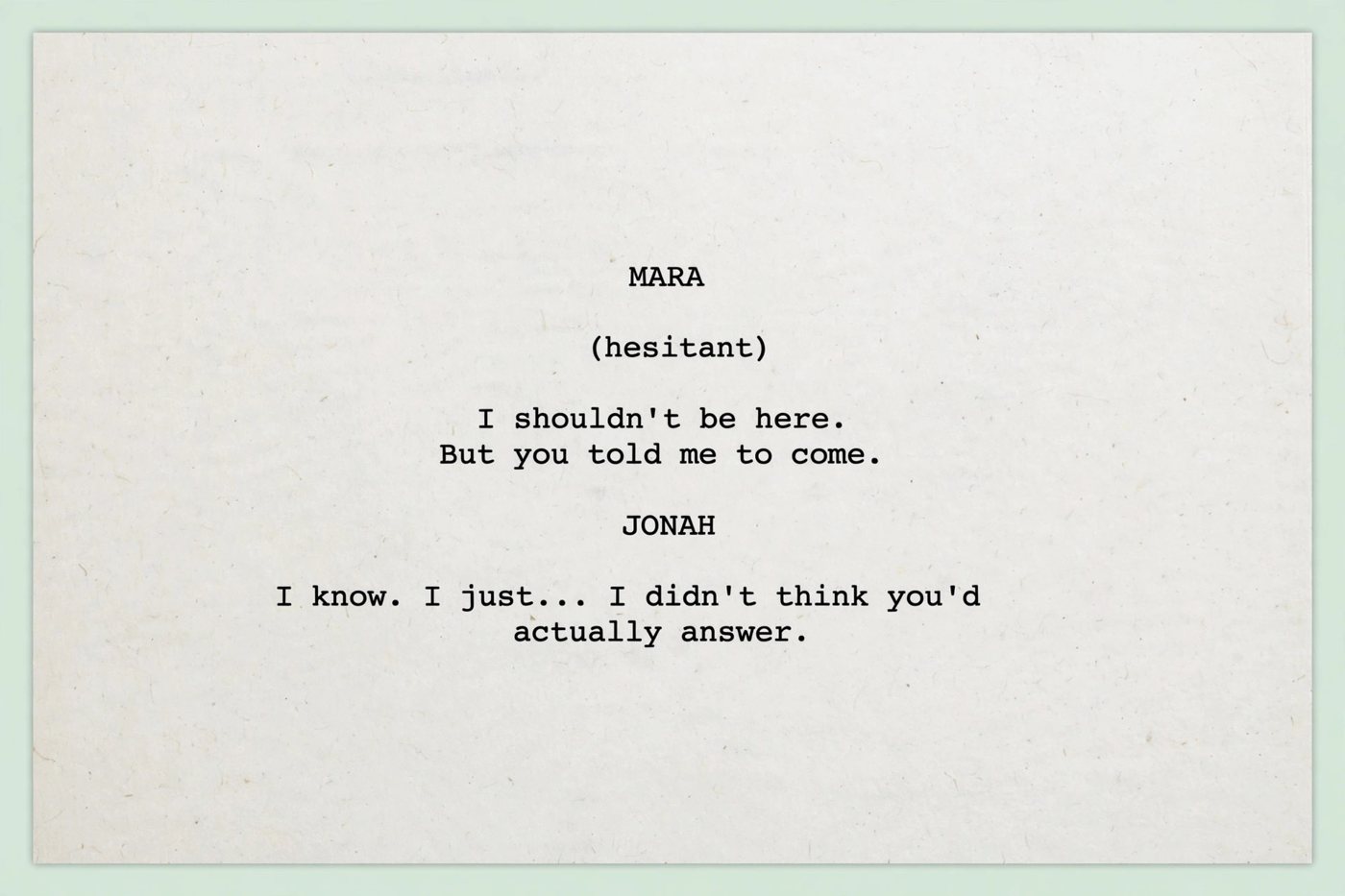
A spec script carries none of that. In a spec, scene numbers are usually omitted so they do not interrupt the read. Camera directions like CLOSE UP or DOLLY IN are left out, and editing transitions are minimal or absent. The reader of a spec is an agent, a manager, a producer, or more often their assistant, and the document exists to make that person feel the story, not to plan the shoot. Celtx puts the difference in one line for each document. The spec says, here is a great story, you should buy it. The shooting script says, here is exactly how we are going to film this great story. Celtx also advises against submitting a shooting script when you are trying to sell a movie idea, because producers and studios only use shooting scripts after they buy or greenlight a script.
Write the spec as a reading document. If a line of description tells the director where to put the camera, cut it and let the image do the work. If a transition tells the editor how to cut, cut it and let the scene end do the work. Your job is the story, the characters, and the feeling of watching it play. The camera and the cut belong to the people who come after the sale.
What readers are actually judging
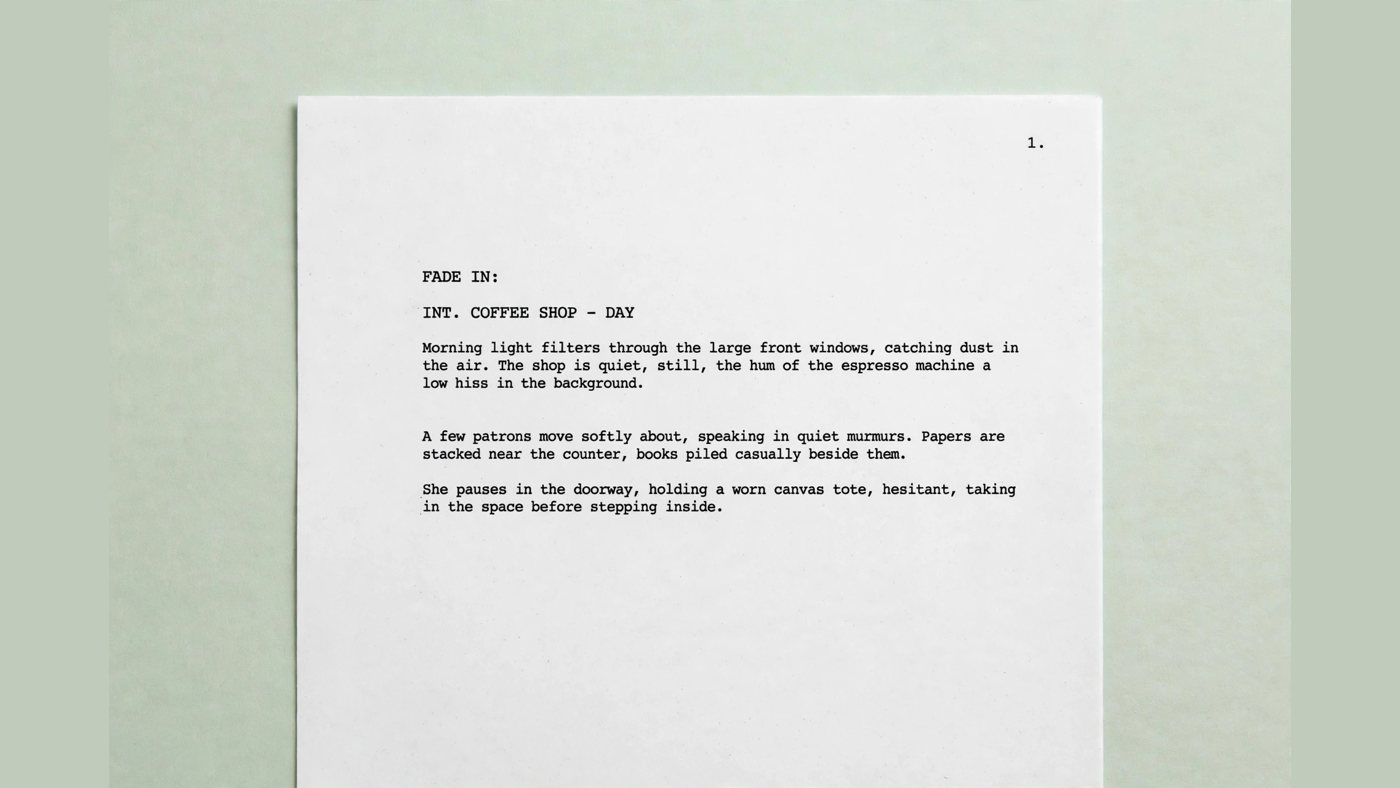
A spec is read by people with tall stacks of good scripts to get through every day, and the first thing they judge is whether the pages feel professional. That starts with format. Use industry standard formatting, the kind covered in our guide to how to format a screenplay, and keep the page clean. No fancy fonts, no images, no decorative title page. A script that looks like every other professional script lets the reader forget the format and pay attention to the writing.
Then they judge the opening. The first ten pages have to prove you can set a world, introduce a character worth following, and make a promise the rest of the script keeps. Our guide to how to start a screenplay walks through that opening stretch in detail, but the test is simple. After ten pages, the reader should know whose story this is, what that person wants, and why it will be hard to get. If the reader cannot answer those three questions, the concept needs work before the pages do.
Then they judge voice. Voice is the hardest thing to define and the easiest thing to feel. It is the way you choose images, the rhythm of your action lines, the jokes only your characters would make, and the observations only you would notice. StudioBinder points to Mickey Fisher, who wrote the pilot for Extant, as the example to study. Fisher tried at first to spread his portfolio across many different kinds of projects, and the lukewarm response pushed him back toward the material that sounded most like him. The spec that gets you noticed is usually the one that could only have come from you, not the one that could have come from anyone.
Structure matters too, but structure is craft, not a cage. A clear act one turn, a midpoint that shifts the story, and a third act that pays off what was set up will not make a weak idea strong, yet a strong idea with no shape will still lose the reader halfway through. And dialogue has to do double work. Lines should reveal character while they move the scene, and the best lines mean more than they say. Our piece on writing dialogue and subtext goes deeper on that exact skill.
How to write one that gets noticed
Start with an outline or a treatment before you write pages. A spec is a long document, and an outline keeps you from getting lost in the middle of act two, which is where most specs quietly fall apart. Know your ending before you start, know your midpoint before you write it, and know what your main character wants in every scene, even the quiet ones.
Then write the draft for the reader, not for yourself. Keep action lines short and visual. Give the reader images they can see, not summaries they have to decode. Read your dialogue out loud, and cut any line that only exists to explain the plot. Trust the reader to follow you. The writers who get noticed are the ones who respect the reader's intelligence.
Then rewrite, and rewrite again. A first draft proves you can finish. A polished draft proves you can be trusted with an assignment. Before you send a spec anywhere, read it once from the top with fresh eyes and ask the question a reader will ask: would I keep turning pages if I did not know the writer? If the honest answer is no at any point, that is the scene to fix.
One more habit separates specs that get read from specs that get set aside. Finish the script. A half finished spec is not a calling card, it is an apology. Readers, contests, and reps all want a complete document, and a finished script at 110 pages beats a brilliant 40 pages every time.
What to do with a finished spec
A finished spec has three honest paths, and the strongest writers work all three at once.
First, build the portfolio. One spec is a start. Three finished pieces, a feature spec, a sample episode, and a pilot, in the shape John August recommends, mean that when someone asks what else you have written, you have an answer. Keep the pieces close in voice and genre, so the portfolio reads as one writer with a point of view, not three writers sharing a name.
Second, enter competitions that fit the script. StudioBinder advises picking from high value screenwriting competitions and narrowing to the ones that satisfy the genre and tone of your script, rather than entering everything. The best known of them is the Academy Nicholl Fellowships in Screenwriting, founded in 1986 and administered by the Academy of Motion Picture Arts and Sciences. As of the 2024 contest, 24 winning scripts had later been produced, and starting in 2025 the Academy partnered with more than 40 global universities and writing labs, as well as The Black List, to invite submissions. Fellows complete a feature length screenplay during the fellowship year. A placement in a competition like Nicholl does not guarantee a sale, but it puts your script in front of readers who are looking for new writers, which is the entire point.
Third, study the best specs of the year. The best spec scripts are ranked by The Black List yearly, and reading past winners is one of the fastest ways to learn what a spec that gets noticed actually looks like on the page. Notice how little camera direction they carry, how clean the action lines are, and how fast the first ten pages move.
What not to do matters just as much. It is virtually impossible to get an unsolicited script read by a production company, so do not send your spec cold to studios and expect a read. Do not send a spec episode of a show to that show's own team. And do not confuse attention with a sale. A spec that gets you noticed has done its job even if nobody buys it, because the meetings, the representation, and the assignments it leads to are the real payoff.
Before you send it out
A spec only works if it reaches the right reader in the right shape, so protect it before it leaves your desk. Register your script and keep a dated record of your drafts, and learn the steps in our guide to protect your work before you query anyone or enter any competition. Ownership is the part of the process that costs the least attention and matters the most later, and a writer who protects the work is a writer a rep can take seriously.
Then write the next one. GREENLIGHT exists for exactly this loop. Write the script in Create, sharpen the craft in the Academy, and when the script is ready, Discover is where producers and the industry meet the work. The spec is the first step of that journey, not the last. The writer owns the story, the teacher helps the writer get better, and the script does the talking.
Sources
- How to Write a Spec Script, StudioBinder
- Spec Script vs Shooting Script: What's the Difference?, Celtx
- Nicholl Fellowships in Screenwriting, Wikipedia
Write the movie. Understand the movie. Plan the movie. Sell the script.
GREENLIGHT is a filmmaking and screenplay development platform where the creator owns the story. Start creating • Learn in the Academy • See how discovery works