Craft, production, and the journey from screenplay to screen.
How to Write a Horror Screenplay
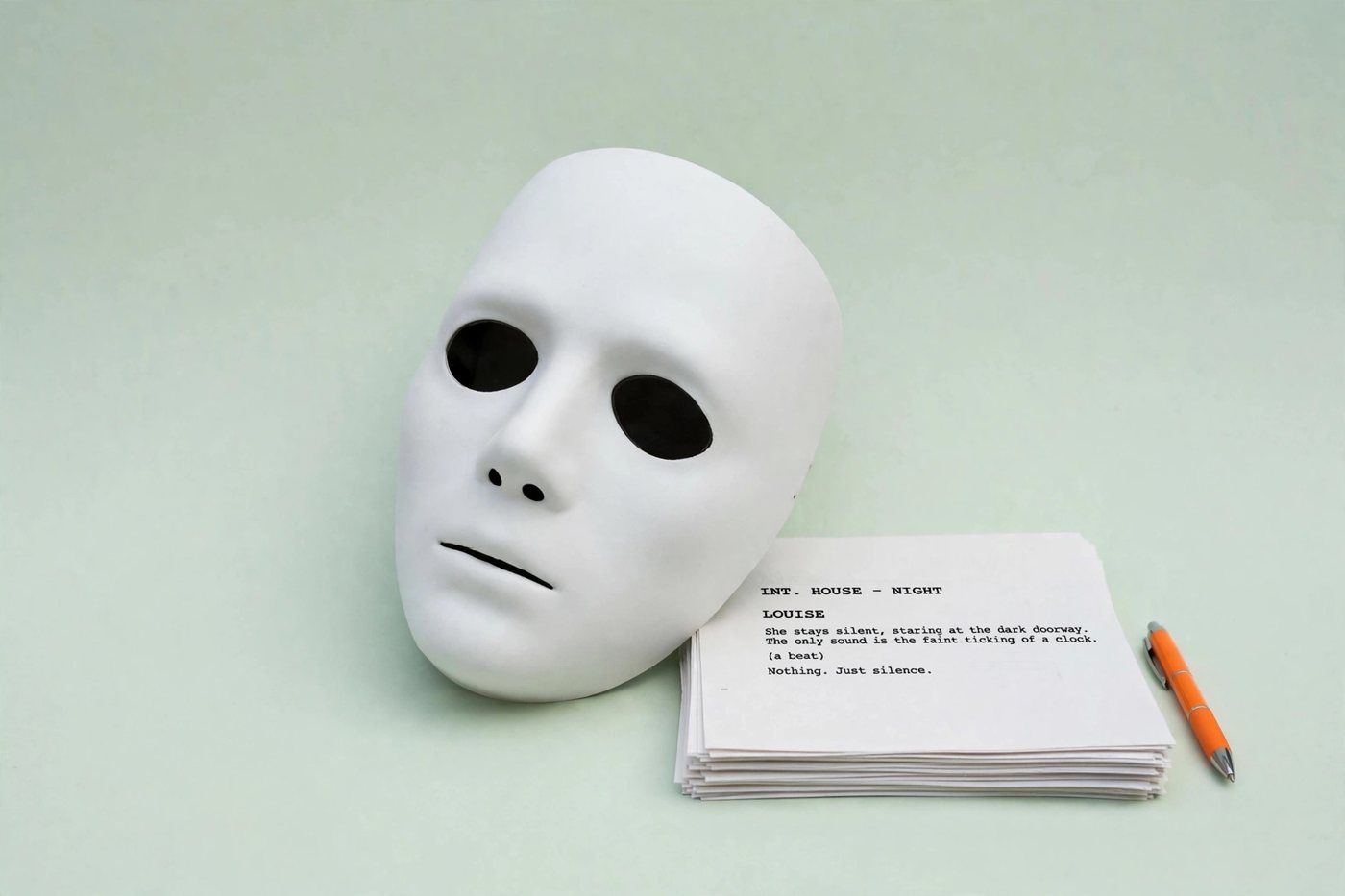
The scariest part of a horror movie is not the monster. It is the wait before the monster shows up: the locked door, the wet footprints that stop halfway down the hall, the father who insists everything is fine while he quietly moves the kitchen knives out of reach. A horror screenplay is built out of that wait. It makes the audience understand exactly what might happen, hope it does not, and keep reading anyway. The creature, the killer, or the curse is only the delivery system. Fear is the story.
Start with the fear, not the monster
Every horror film that lasts runs on a fear engine: the human anxiety the plot keeps pressing. A masked intruder is a threat. "Nobody will believe me until it is too late" is a fear engine. A haunted house is a location. "My family would rather protect its secrets than protect me" is a fear engine. The old core fears underneath almost every horror story are few: the unknown, death, loss of control, isolation. Your job is to pick the one that belongs to you and build the machine that presses it.
Jeffrey Reddick, the creator of Final Destination, has said the franchise tapped into the universal fear of death, and he also stresses that suspense does not matter if viewers do not care about the leads. Both halves matter. A broad fear becomes drama only when it attaches to a particular person.
Try this sentence before you outline anything:
This is a story about the fear that caregiving can erase who you are, expressed through a patient who steals memories, attacking a night nurse's bond with her daughter.
Now the horror can do more than chase somebody down a corridor. Every stolen memory threatens the nurse's job, her credibility, and the relationship she is trying to save. The mechanism and the emotion pull the same rope.
Build the person the audience fears for
Horror characters do not need to be likable. They need to be worth fearing for. Give the protagonist a concrete want before the horror begins, a relationship that can be damaged, and one line they will not cross yet. Then give them a strength that the story can turn against them. Loyalty protects the person carrying the threat. Rationality rejects impossible evidence a beat too long. Independence refuses help until the isolation is complete. The flaw should look like a survival skill in ordinary life, because inside the horror story it becomes the handle the threat grabs.
Ari Aster built Hereditary out of a painful period in his own family, and it shows in the structure: the family drama is not decoration around the supernatural plot. It is the material the supernatural plot burns. A reluctant skeptic investigating a haunting is thin. A mother who mistakes control for love, investigating a haunting that makes her children afraid of her, has teeth.
Pick your subgenre, then ground it
Know which fear machine you are running. Psychological horror replaces the monster with a mind coming apart, as in Black Swan. Supernatural horror brings in ghosts, demons, and curses from outside the known world, as in The Exorcist. Slasher horror sends a killer stalking a group, as in Halloween, where the final girl trope was set. Each subgenre scares differently, and the audience can tell within pages which one they are in.
Whichever you choose, ground the fear in a familiar, safe place and then subvert it: a new house, a new job, a family dinner. The scare lands harder because the audience recognizes the room. When the premise holds still, boil it into a logline: the protagonist, the threat that starts the horror, what they must do to survive it, and the hook that makes it fresh.
Give the threat rules, and leave one door unexplained
Total randomness does not create fear for long. It creates noise. The audience needs enough of a pattern to anticipate pain, and that anticipation is dread. So write a private rule sheet for your threat, even if the script never states it outright:
- What attracts it?
- What can it perceive, and what is it blind to?
- What can it do, and what can it not do?
- What price delays it?
- How does it change after each encounter?
- Which rule is actually a character's wrong assumption?
Rules create decisions. In A Quiet Place, the creatures hunt by sound, so every scene becomes a choice between silence and warning someone you love. If a ghost can imitate only remembered voices, then forgetting becomes protection and loss at the same time. Keep one edge of the threat unexplained: legible enough to strategize against, strange enough that it never becomes a household appliance with murder settings.
The opening teaches the audience how to be afraid
The first scene does not need a body. It needs a contract. By the end of it, the audience should know what flavor of horror they entered, whose experience anchors it, and what kind of detail deserves their attention. A reliable shape is normal, wrong, worse. A custodian wheels an empty bed toward a service elevator: normal. The elevator arrives with wet footprints inside: wrong. He steps in to press the emergency button because a patient might be hurt: worse. The scene has movement, character, and a question pulling us forward, and nobody had to whisper a mythology lecture. The same discipline that governs the first ten pages of any script applies double here, because horror readers decide early whether they trust you with their fear.
Climb the dread ladder
"The room feels creepy" is not escalation. Dread rises when information, proximity, and cost change. Build a ladder of at least five rungs:
- Trace. Evidence that may have an innocent explanation. What can the protagonist dismiss?
- Pattern. A second event connects to the first. Who notices the link?
- Contact. The threat responds to the protagonist. What proves this is personal?
- Cost. Somebody loses safety, trust, or control. What can no longer be restored?
- Choice. Survival demands a sacrifice. What will the protagonist refuse to pay?
Each rung should be caused by a decision. The protagonist opens the sealed room to disprove a rumor. They destroy the recording to protect a friend. They lie because the truth would expose them. Robert Eggers has described atmosphere as an accumulation of details drawn from research, weather, light, and the physical world. Atmosphere makes the ladder feel cold under the character's hands. Story is what makes them climb it.
Write scares as tiny stories
A scare is not something jumping out. It is a miniature dramatic sequence with five beats. First the promise: what the character expects. Then the intrusion: a detail that does not fit. Then the investigation: the character acts. Then the turn: they misunderstood the danger. Then the aftermath: the plan, the relationship, or the rules change.
Run the aftermath test on every scare you write. If the aftermath is that everyone keeps doing what they were doing, cut the scare or make it bite harder. The suspense in a Final Destination death scene comes from not knowing where the accumulating danger is going; the impact is only the period at the end of a sentence the scene has been writing for minutes.
Control what the audience knows
Suspense is an information problem, and horror runs on what a scene holds back, the same subtext that powers good dialogue. For every sequence, decide who knows what. Sometimes the audience is ahead: we see the figure enter the house, the character does not, and the fear comes from waiting. Sometimes the character is ahead: they recognize the nursery rhyme, we do not, and the fear comes from exclusion. Sometimes we discover the open grave together. And sometimes everybody is wrong, holding an explanation that later collapses, which is how The Sixth Sense hides its truth in plain sight for two hours. Switch modes on purpose. If the audience is always behind, the script feels coy. If they are always ahead, the characters look foolish.
The midpoint turns, the ending answers
Many horror scripts go repetitive in the middle: noise, investigation, scare, denial, repeat. The midpoint should not deliver a bigger scare. It should reveal that the protagonist has misunderstood the story. The safe place is the source. The rule they trusted for protection is feeding the threat. Their goal would hand the threat exactly what it wants. After that turn, earlier scenes gain a second meaning and every later choice gets morally harder, so the script accelerates without simply raising the body count.
The climax then answers the fear engine, not the weapon drawer. If the story is about not being believed, the climax requires the protagonist to act without validation. If it is about inherited violence, victory may mean refusing the family ritual rather than defeating its monster. The character may survive. The old version of their life should not.
Where GREENLIGHT fits
Horror is scene work. A scare either changes the plan or it is decoration, and that is a question about the scene in front of you. GREENLIGHT is a script editor built to support the writer. When a sequence will not scare, bring it to Guide. Guide questions it the way a good teacher does: what is the character protecting in one plain sentence, what does the threat want in this scene, what is the scene holding back that the audience needs to feel. Each question gives you a new angle on the scene, so you keep going. Guide never writes the story for you. Every choice stays yours. Open your script in the editor and ask Guide what your scariest scene is really about. The creator owns the story at every stage.
Try it
- Write your threat's rule sheet before your next scene: what attracts it, what it cannot do, what price delays it, and which rule is a character's wrong guess.
- Build a five rung dread ladder for one sequence, and make sure every rung is caused by a decision your protagonist makes.
- Take one scare and write its aftermath first. If nothing changes after it, rewrite the scare until something does.
Sources
- How to Write a Horror Screenplay That Scares Before the Monster Arrives
- How to Write a Horror Movie Script: From Dreams to Screams
Write the movie. Understand the movie. Plan the movie. Sell the script.
GREENLIGHT is a filmmaking and screenplay development platform where the creator owns the story. Start creating • Learn in the Academy • See how discovery works