How to Write a Short Film Script You Can Actually Shoot
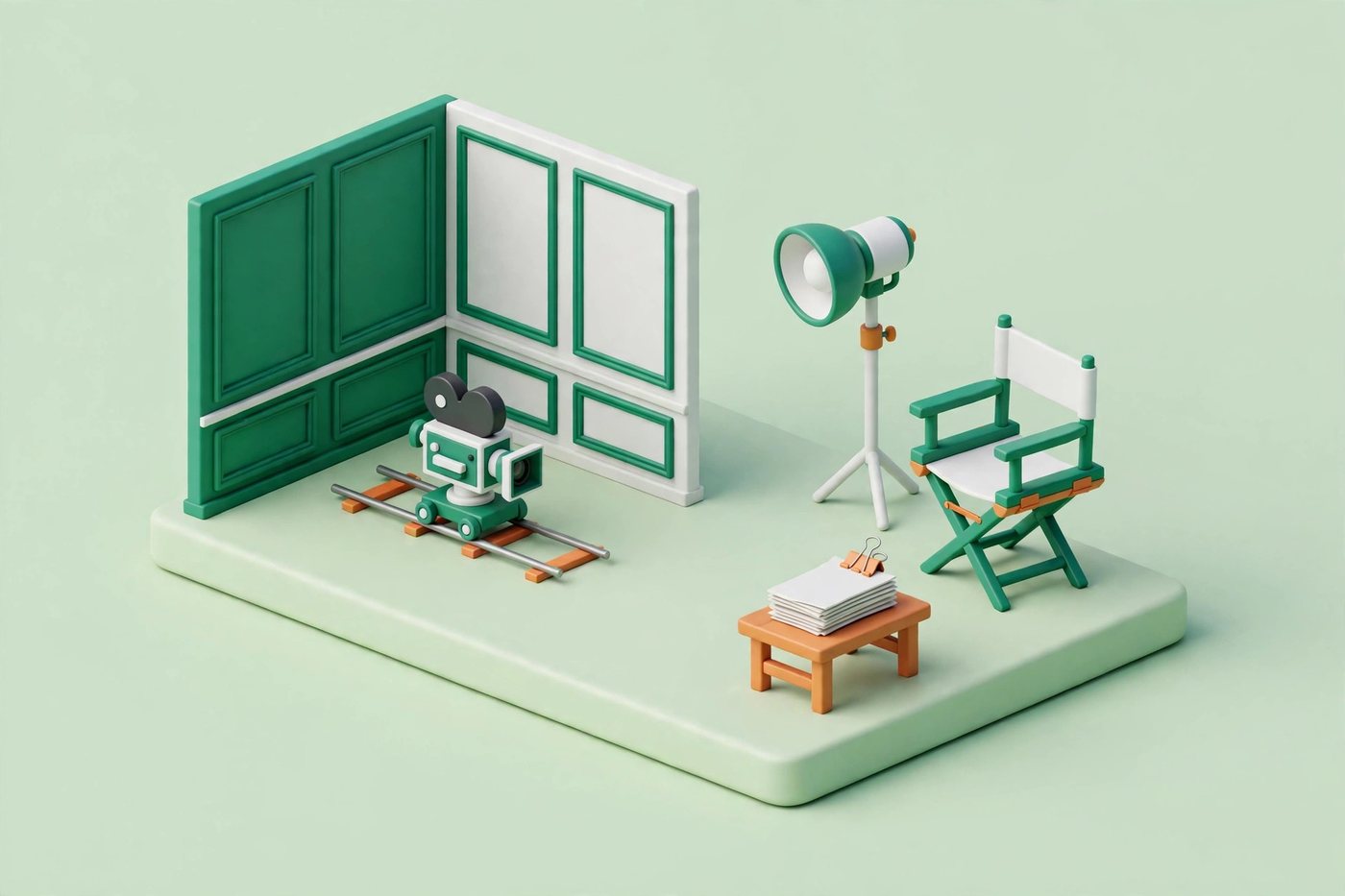
You write a short film script you can actually shoot by starting from what you can truly control: one story, one main character, one or two locations you can get into, a small cast, and a page count that matches the days and money you really have. The shootable script is not a smaller feature. It is a complete film designed from the first page for the crew, the places, and the weekend you can actually assemble.
That discipline starts before the first scene. The Academy defines a short film as an original motion picture with a running time of 40 minutes or less, including all credits. That is a ceiling, not a target. Most writers who finish and screen their work aim far under it, because every page you write becomes time someone has to light, perform, record, feed, and edit. Write the film you can finish, and finish the film you wrote.
Start with a treatment that fits on one page
Show Me Shorts, the New Zealand short film festival, advises writers to begin with a treatment that is usually not more than a page long and may be only a few paragraphs. A treatment states the story, the main character, the setting, and the tone, and it shows the shape of the arc before dialogue hides the problems. If the story does not work in a few honest paragraphs, ten pages of script will not save it.
Share that page early. A treatment is cheap to change and expensive to ignore. A friend who will shoot with you can read it in two minutes and tell you whether the location exists, whether the ending lands, and whether the one big moment is filmable with what you own. That conversation is production design at the writing stage, and it is where a shootable short separates itself from a hopeful one. The GREENLIGHT Academy teaches story shape in the same spirit: understand what your story is doing before you polish how it sounds.
Choose a length a festival can program
The general rule for screenplays is that one page corresponds to about one minute of screen time, a guideline Show Me Shorts repeats when it warns writers not to make a short overly long. Script Reader Pro gives the working range most directly: stick to short film scripts of 5 to 20 minutes, which means roughly 5 to 20 pages, and remember that shorter is usually better. The reason is programming. Festivals build screening blocks of 60 to 90 minutes that need to fit anywhere from five to ten short films, so a tight film is easier to place than a long one asking for the space of three others.
FilmLocal goes further for a first festival attempt and advises keeping a short to no more than ten minutes, usually seven or eight pages at most, and remembering that credits take time too. Show Me Shorts notes that many short film festivals set a maximum length for films of around 20 minutes, and that shorter films are often easier to get screened and distributed. None of this is a law. It is a practical map: pick the running time before you draft, count your pages against it while you write, and time a table read before you lock the script, because action and silence play longer than dialogue.
Write one story, with one goal
A shootable short carries one storyline. Script Reader Pro puts it plainly: keep the plot simple and compelling, and stick to one storyline, one goal, and one clear narrative, because multiple storylines turn a short into a miniature feature that nobody has time to invest in. FilmLocal makes the same point from the audience side: the strongest shorts are often a single moment played out fully, with a conflict to resolve, a dilemma at stake, and a choice the protagonist has to make.
So build the script around one person who wants one thing and meets one serious obstacle. Show Me Shorts notes that most short films centre on a single protagonist, and that adding more central characters can dilute the emotional intensity of the story. Give that protagonist a problem that can be seen, not explained: a letter that must be delivered before a train leaves, a shift that must be covered before a parent arrives, a final song that must be recorded before the hall closes. If the want cannot be photographed, the short will talk itself to death.
Your logline is the test. If you cannot state who the story is about, what they want, and what stands in the way in one or two sentences, the short is probably two stories wearing one coat. Cut the second story and save it for its own film.
Write for locations you control
Every location in a script is a promise the production has to keep. Script Reader Pro advises basing short film scripts around one or two locations, starting with places you can get for free, such as your own house, the houses of friends, or a business owned by someone you know, and rewriting any location you probably will not have access to. FilmLocal adds the production view: write for locations that are interesting yet practical, think about access and control, and avoid remote locations that require driving for miles.
- One hero location. A kitchen, a workshop, a laundromat, a parked car with a story inside it. Dress it well and light it once, and it can carry a whole film.
- One move at most. A second location should be close, controllable, and worth the company move it costs in time.
- No borrowed spectacle. Script Reader Pro warns against taking on personal debt to finance a short, and FilmLocal notes that pages of chase action and car crashes are time consuming and expensive to shoot. A locked door, a ringing phone, and a person who must decide now will hold an audience longer than a stunt you cannot afford to do safely or twice.
- Daylight is a budget line. Exteriors in daytime and interiors you can light with a small kit keep a one or two day shoot honest.
This is where writing and producing become the same craft. In GREENLIGHT Create, the script and its production plan live together, so a scene heading is never just a line of text: it is a place the schedule and the budget will have to answer for.
Keep the cast and the company small
A cast you can feed is a cast you can finish with. Two to four speaking parts is a generous company for most shorts, and every added character adds wardrobe, makeup, scheduling, and another performance the edit has to serve. Show Me Shorts advises describing characters through mannerisms and demeanour, not only age and appearance, because those visible quirks tell the audience who a person is and can signal what they will do later. On a small shoot that advice is also practical: a nervous habit, a uniform worn with pride, a toolbox carried everywhere. Character you can see costs nothing extra to film.
Write parts for actors you can actually reach, or for the kind of performer your community has. A brilliant role for a child, an elderly actor, or a trained animal is only brilliant if that performer exists in your world and can be on set when you need them. Otherwise, write the truth of the people around you. Small stories told honestly are exactly what the short form is for, and FilmLocal urges writers not to shy away from them.
Format it like a blueprint, because it is one
A short script follows the same standard as a feature script. Our guide to how to format a screenplay sets out the page in full. Show Me Shorts lists the basics for a short: a title page with the name of the film and the author, 12 point Courier font, and numbered pages. Format matters more on a small shoot, not less, because the script is the schedule in embryo. A crew of five friends has no assistant director department to translate a vague page into a plan.
Keep action visual and present. FilmLocal calls film the telling of stories in pictures and the most economical way to tell a story, which matters when economy is everything. If a line of action cannot be seen or heard, cut it or turn it into behaviour. Enter scenes late, leave them early, and let the ending do the work short films do best: Show Me Shorts describes the story arc in a short as building until the hardest thing the character must do arrives at the climax, which in a short often marks the ending itself.
Use the short as proof, honestly
A finished short is evidence that travels further than a promise. Script Reader Pro tells the story of Whiplash as the working example: Damien Chazelle had written the feature, took one of its most intense scenes, and made an 18 minute short from it. The short was accepted at Sundance and won the Short Film Jury Prize for US Fiction, and interest in the feature script followed. The lesson is not that every short becomes a feature. The lesson is that a self contained scene with a clear beginning, middle, and end can prove a voice, a cast, and a director in a way a pitch cannot.
That is also the honest way to use a short cut from a larger story. The excerpt must stand alone, with its own conflict and payoff, or it plays as a trailer for a film that does not exist. Audiences and programmers judge the film in front of them, never the one in your head.
Rewrite, protect, and then shoot
Show Me Shorts is blunt that a first script will not be good, that feedback is one of the most important parts of screenwriting, and that it is completely normal for a short film script to go through more than 20 drafts before it is ready to be made. Plan for that. Do a table read with the actual cast if you can, listen for the pages that play long, and cut the scene everyone loves that the story does not need. The creator owns the story, and ownership includes the right to keep cutting until the film is the one you meant.
Before the script travels, keep your records. Show Me Shorts advises keeping paper and electronic records of notes, treatments, and drafts to help show when the work was created, and Protect Your Work sets out how GREENLIGHT approaches that discipline before a script is sent out. When the finished short is ready to meet programmers and producers, Discover explains how GREENLIGHT thinks about that pathway. And keep the division of labour clear in your own process: GREENLIGHT treats AI as a film teacher that helps you understand your story, never as a generator that owns it. The decisions, the cuts, and the final page stay yours.
Frequently asked questions
How long should a short film script be?
For most writers aiming at festivals, 5 to 20 pages is the working range given by Script Reader Pro, with shorter usually easier to program. The Academy ceiling for a short film is 40 minutes including credits, but a first short that you will shoot yourself is usually stronger at ten pages than at thirty.
How many locations should a shootable short have?
One or two, and both should be places you control or can borrow with permission. Every extra location costs a move, a new lighting setup, and time you could have spent on performance.
Can a short film script become a feature?
It can, when the short stands alone first. The Whiplash short worked because the scene was complete in itself, and its festival success created interest in the feature that already existed on paper.
Do I need standard format for a short I shoot myself?
Yes. Standard format is how your small crew reads time, builds a schedule, and knows what a page will cost to shoot. Friends forgiving a loose format on set becomes confusion by the second day.
Sources
- Special Rules for the Short Film Awards, Academy of Motion Picture Arts and Sciences
- How to Use Short Film Scripts to Start Your Writing Career, Script Reader Pro
- Nail Your Short Film Script, Show Me Shorts
- 7 Tips for Writing a Short Film, FilmLocal
- All sources were read on October 19, 2026. Lengths, festival block details, and the Whiplash account above follow those sources.
The GREENLIGHT Blog teaches the craft and the business of getting a script made. The creator owns the story, always.
Write the movie. Understand the movie. Plan the movie. Sell the script.
GREENLIGHT is a filmmaking and screenplay development platform where the creator owns the story. Start creating • Learn in the Academy • See how discovery works