Craft, production, and the journey from screenplay to screen.
What Does Optioning a Screenplay Mean?
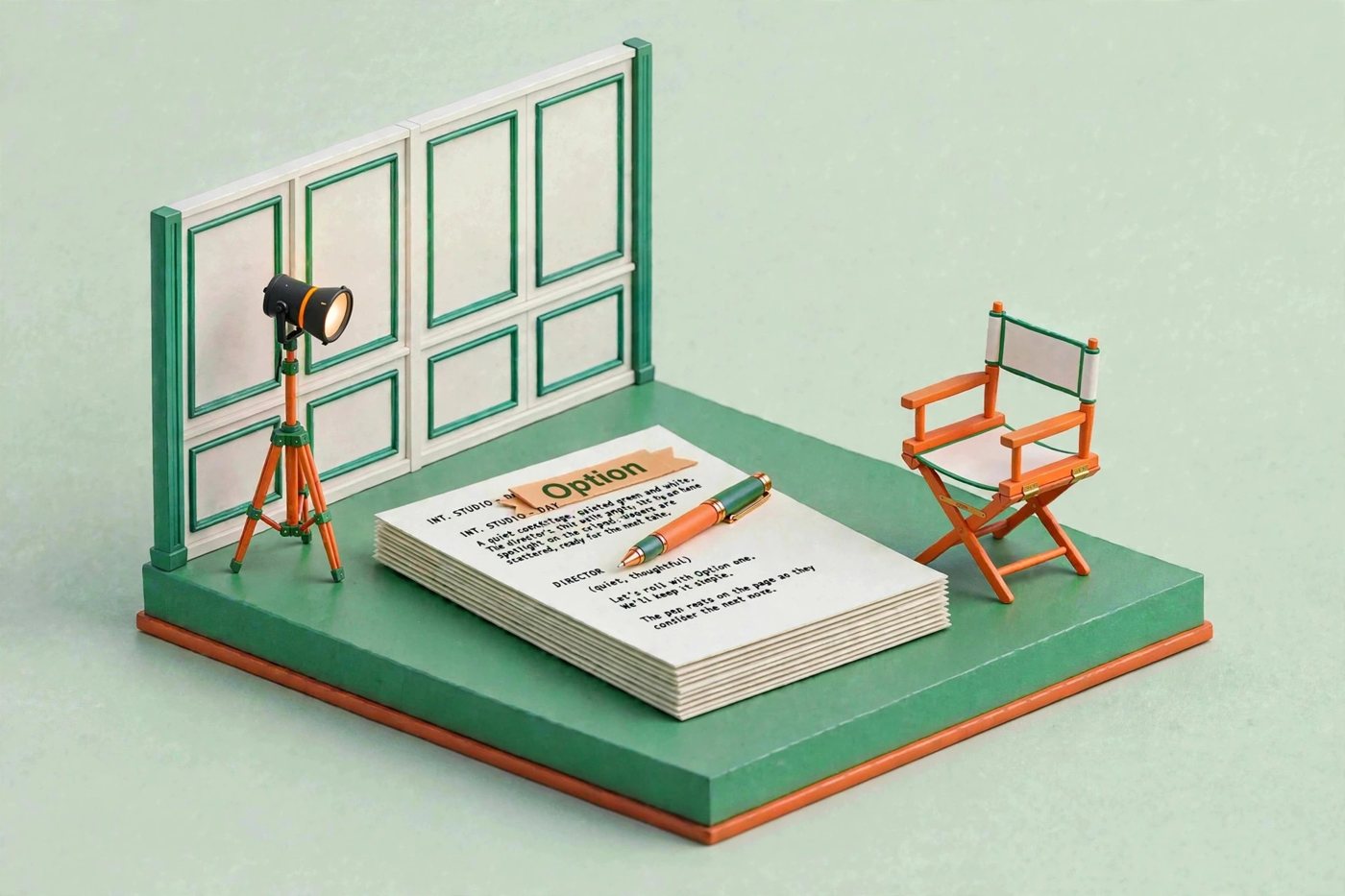
To option a screenplay means a producer pays you for the exclusive right to buy your script later, at a price you both agree on now, within a fixed window of time. During that window, called the option period, nobody else can buy or develop the script: it is off the market. But it is still yours. A producer who options your screenplay has rented it, not bought it.
Why does the industry work this way? Buying a script outright costs real money, and most projects never get financed. An option lets a producer spend a fraction of the purchase price to hold the rights while they attach a director and actors, raise money, and shop the project. Screenwriter John August lays out the classic deal in plain terms: a payment now, exclusivity for the option period, the right to buy all rights at a pre-determined price at any point during it, and the chance to renew. If the producer sets the movie up, they exercise the option and pay the purchase price. If they do not, the clock runs out and the rights come back to you.
The option agreement, piece by piece
The option period is the heart of the deal: the span of time the producer holds the exclusive right. Final Draft's breakdown of the practice puts the usual range at six months to a year, sometimes up to eighteen months, and the agreement can allow extensions if both sides agree.
The option fee is what you are paid to take your script off the market. Sometimes there is no fee at all: free options have become common, especially with independent producers who do not have purchase money yet. When a fee is paid, it ranges from a few thousand dollars to around 10 percent of the agreed purchase price. Entertainment lawyer Mark Litwak calls 10 percent of the full purchase price the rough rule of thumb, and notes the amount is always negotiable. John August gives a sample deal to show the shape of one: $5,000 for a two-year option, renewable twice at the same terms, with a buyout of $100,000.
The purchase price is the full amount you receive if the option is exercised. This must be negotiated when you sign the option agreement, not later. Litwak is blunt about why: an option with no purchase terms agreed is a worthless option, because once the producer wants the rights and no price is set, you are left haggling from weakness. A good lawyer negotiates the purchase price together with rewrite steps, your compensation for each step, bonuses, and on screen credit in this same document.
Renewal clauses give the producer the right to extend the option period for an additional fee, paid before the current period expires. A common shape from Litwak's practice: a one-year option for $5,000 with a renewal for a second year at $6,000. Multiple renewal rights can be stacked, which is exactly why August advises writers to watch these clauses closely. A one-year or two-year option with one chance to extend for a year should be adequate for most situations, he writes. You do not want your script caught in an endless cycle of renewals with a producer who cannot get your movie made.
What the producer can do with your script during the option
During the option period the producer can attach talent to the project, ask you to rewrite the script or bring on other writers to rewrite it, and shop it to different studios with the hope of setting it up. Until the option lapses, they are free to change whatever they want. This is where the contract needs precision about who owns the new writing created during the option if the deal dies. August describes the range: the hardest version says the producer owns all revisions outright, while the fairer version lets the screenwriter claim the work they did during the option period. Either way, when an option expires, you get your original script back.
What happens when the option expires or is exercised
There are two doors out of an option agreement, and the contract decides which one you walk through.
If the option expires without being exercised, everything returns to you. You keep the option money, and all rights revert. Litwak notes that some writers have sold options on the same property repeatedly, because each expired option hands them a marketable script again. This is the quiet power of a short, capped option: a producer who does nothing sends your script home fast.
If the option is exercised, the purchase agreement takes over. You are paid the purchase price, reduced by any option fees that were agreed to be applicable against it, and the rights transfer to the producer. At that point the script is theirs. Push for a reversion clause in the purchase terms: if production has not started within a set time, five years from purchase is a common example, the rights come back to you. And know one clause going in: the producer has the right to make the film, but no obligation to. An exercised option guarantees payment, not production.
One more term worth learning now, because it decides how much you keep: applicable versus non-applicable. If your option fee is applicable, it counts as an advance against the purchase price, so a $5,000 applicable fee against a $50,000 purchase price means $45,000 more at exercise. If it is non-applicable, the full $50,000 is still due. Get applicability in writing whenever you can.
The three protections writers forget
Most ranking pages on this topic speak to producers as much as writers. From the writer's side, three things matter most.
First, negotiate the purchase price inside the option agreement, along with rewrite steps and credit. A price left for later is leverage left on the table.
Second, cap the term and the renewals. Short options keep pressure on the producer and return your script faster. Final Draft's advice is direct: the best options are short and carry some money upfront. Money proves the producer is invested; a firm end date proves your script will not sit in a drawer for years.
Third, treat the option as what it is: a paid hold, not a sale. Most options never lead to sales, which is a normal fact of a competitive marketplace, not a personal failure. Judge the deal by whether the producer has a real track record of setting projects up, and by how quickly your rights come back if they do not.
FAQ
How much does it cost to option a screenplay?
There is no fixed price. Paid options range from a few thousand dollars to around 10 percent of the agreed purchase price, and free options are common with independent producers. The terms, the producer's track record, and your lawyer's leverage decide the number.
How long does a screenplay option last?
Typically six months to a year, sometimes up to eighteen months, with possible renewals at a pre-agreed price. A one-year or two-year option with a single extension is adequate in most situations; avoid open ended renewal rights.
What is the difference between optioning and selling a screenplay?
An option rents exclusive development rights for a set time, and you keep ownership until the option is exercised. A sale transfers the rights outright through a purchase agreement: they own the script and you are paid in full, usually with rewrite steps, bonuses, and credit negotiated by your lawyer.
Can I get my script back if the producer does nothing?
Yes. When the option period ends without being exercised, all rights revert to you and you keep the option fee. Make sure the contract sets a firm expiration date and limits how many times the producer can renew.
Where GREENLIGHT fits
Sell is where your script gets sold or optioned. You open the bidding window when the work is ready, you choose the deal, and you keep everything you earn. Protect your work before you send it anywhere, and bring an entertainment lawyer to handle the paperwork with you. For the full picture, read how writers actually sell scripts and how to protect your screenplay before you send it out. The creator owns the story at every stage, including the stage where someone else wants to buy it.
Sources
- John August, "Optioning a screenplay," August 30, 2004 (updated June 27, 2026): https://johnaugust.com/2004/optioning-a-screenplay
- Final Draft, "Screenplay Options vs. Screenplay Sales," updated December 9, 2025: https://www.finaldraft.com/blog/screenplay-options-vs.-screenplay-sales
- Mark Litwak, "Optioning Literary Material," Entertainment Law Resources: https://www.marklitwak.com/optioning-literary-material.html
Write the movie. Understand the movie. Plan the movie. Sell the script.
GREENLIGHT is a filmmaking and screenplay development platform where the creator owns the story. Start creating • Learn in the Academy • See how discovery works